
Connect with us on social!
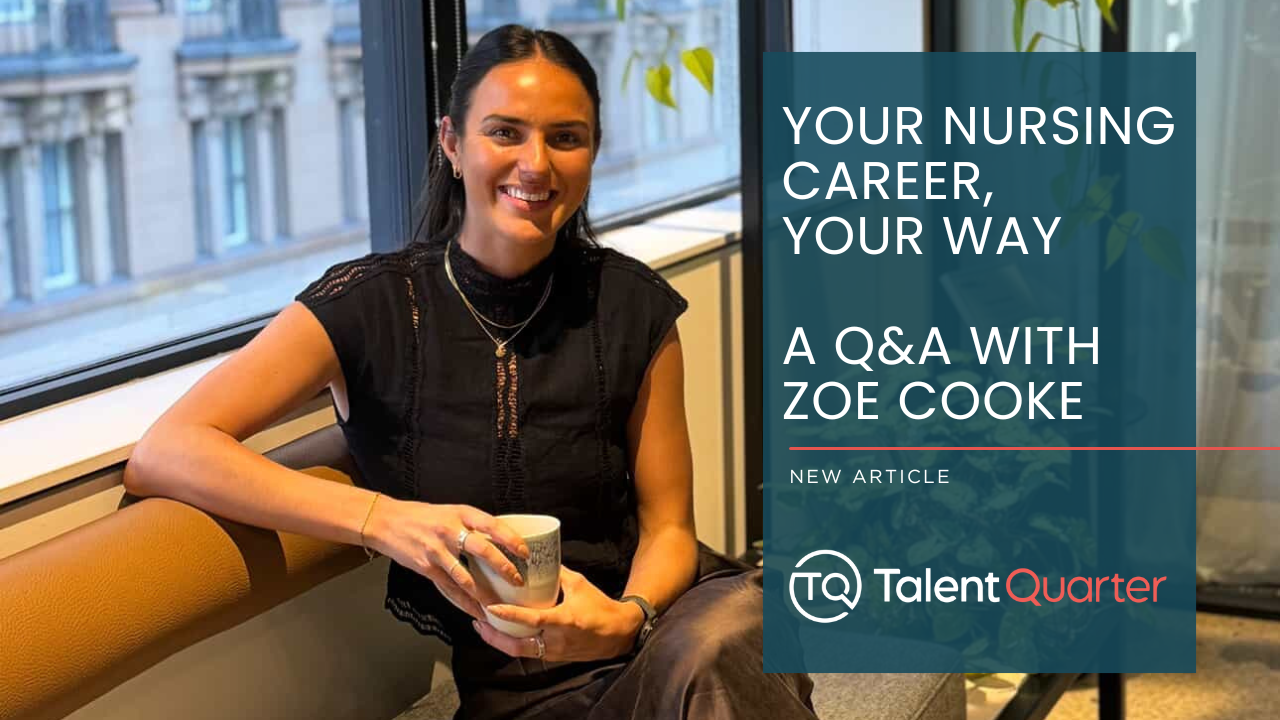

In today’s world of work, careers are no longer linear. Roles evolve. Industries shift. Skills that mattered five years ago may not be enough today. This is where a growth mindset becomes one of the most valuable tools you can bring to your career. What is a growth mindset? A growth mindset is the belief that skills, capability, and confidence can be developed over time. People with a growth mindset: Stay curious Seek out learning opportunities View challenges as part of progress Learn from feedback and setbacks In contrast, a fixed mindset assumes that ability is static, that you’re either “good at something” or you’re not. The concept comes from the work of Dr Carol Dweck, a world-renowned psychologist who studied how people respond to challenge and failure. Her research showed that long-term success is driven less by innate talent, and more by how people approach learning, effort, and growth. In simple terms: It’s not about where you start, it’s about how you respond. Why a growth mindset is so valuable in the workplace Workplaces today are constantly changing. New systems, new expectations, new ways of working. A growth mindset helps individuals navigate this change with confidence rather than fear. Here’s how it shows up in practice: Greater resilience and adaptability - People with a growth mindset see setbacks as temporary. Instead of internalising failure, they ask: What can I learn from this? This makes it easier to recover, recalibrate, and move forward. Stronger learning and development - A growth mindset encourages continuous skill development. Whether that’s learning new technology, stepping into leadership, or expanding your commercial thinking. Increased innovation and creativity - When people aren’t afraid of getting things wrong, they’re more willing to experiment, contribute ideas, and think differently. Better collaboration - Growth-minded individuals are more open to feedback and knowledge sharing, which strengthens teamwork and trust. Improved performance over time - Rather than chasing perfection, a growth mindset focuses on progress, and that’s what sustains performance. Dr Dweck’s research also shows that employees in growth-oriented cultures are: More likely to trust colleagues More committed to their organisation More willing to take smart risks More likely to experience innovation What this means for you as a candidate Whether you’re actively job searching, exploring your next step, or simply thinking about what’s next, a growth mindset plays a key role in how you show up. Hiring managers aren’t just assessing what you’ve done. They’re assessing how you learn, adapt, and grow . A growth mindset helps you: Talk confidently about skills you’re developing Frame challenges as learning experiences Show curiosity rather than defensiveness Demonstrate potential, not just past titles Practical ways to build a growth mindset in your career 1. Reframe challenges - Instead of “I’m not good at this,” try: I haven’t mastered this yet. 2. Ask for feedback…and use it - Feedback isn’t criticism, it’s information. The strongest candidates use it to refine, not retreat. 3. Focus on progress, not perfection - Career growth is iterative. Waiting until you feel “ready” often delays momentum. 4. Value effort and learning, not just outcomes - What you learn along the way often matters more than the immediate result. 5. Be open about what you’re developing - You don’t need to have every skill, but you do need to show willingness to learn. A final thought A growth mindset doesn’t mean ignoring challenges or pretending everything is easy. It means believing that your career is something you can shape - through learning, reflection, and action. And in a world of constant change, that belief is one of your greatest assets. If you’re navigating your next move and want support along the way, working with a recruiter who understands both capability and potential can make all the difference. Your career isn’t fixed. And neither is what’s possible next.
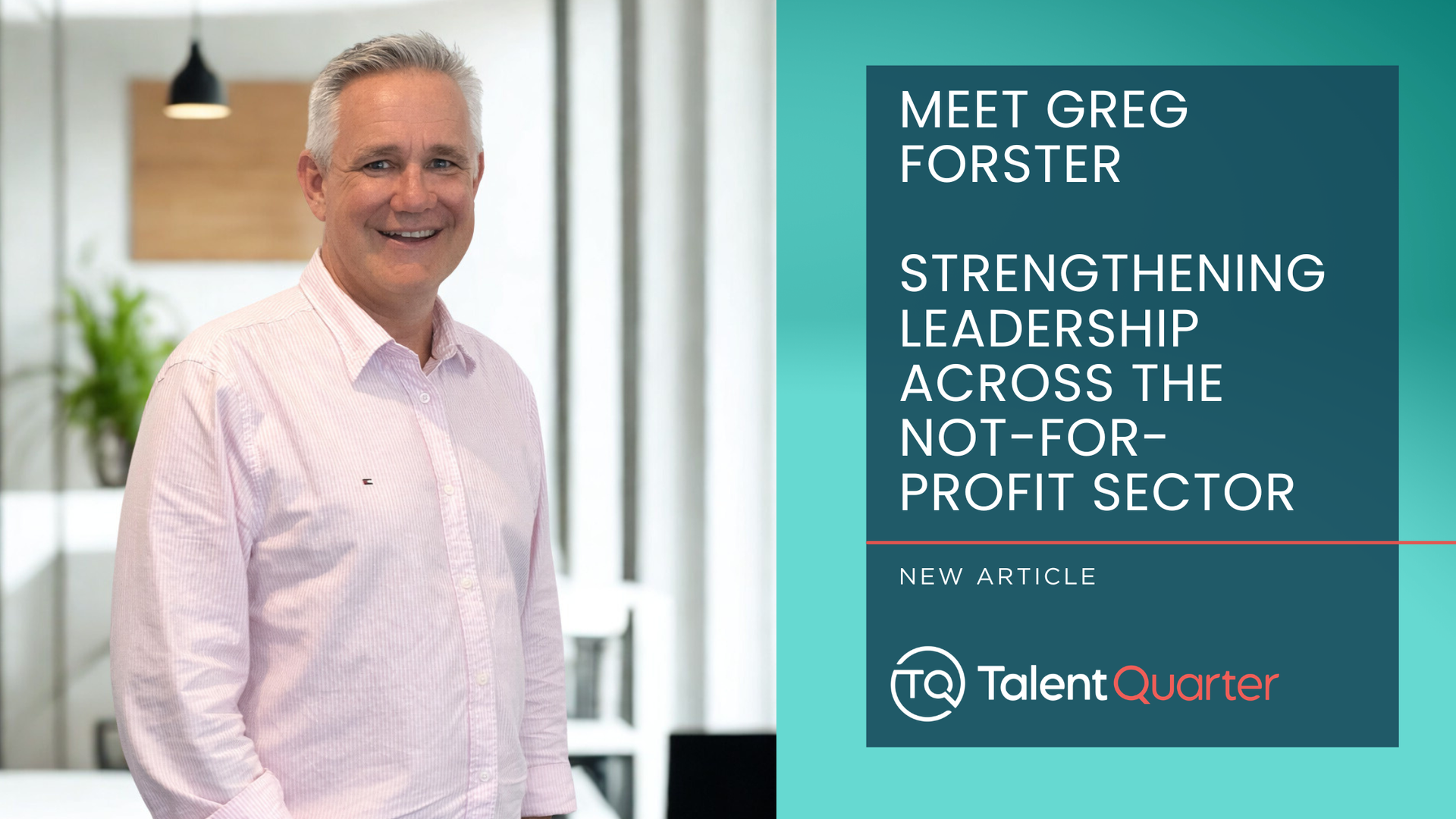
We recently welcomed Greg to the Talent Quarter team, where he specialises in senior and executive appointments across the Welfare and Not-for-Profit sector. With more than 25 years’ recruitment experience across London and Sydney, Greg brings deep search expertise, a strong commercial background, and a genuine passion for purpose-driven organisations. Here’s a quick Q&A to get to know him a little better: Q: What attracted you to working in the Welfare and Not-for-Profit sector? I wanted my work to have a more direct social impact. The organisations in this sector do incredible work, and placing strong leaders who can drive meaningful change is incredibly rewarding. Q: What areas do you typically recruit for? I focus on senior and executive appointments across Child, Adult and Family Services, Domestic Violence, Mental Health, Aged Care and Disability Services. These are complex environments where leadership really matters. Q: What do you look for in great leaders within this sector? Great leaders in this sector combine strong strategic thinking with genuine empathy. They understand the complexity of working within community services and can balance operational demands, regulatory requirements, and the human impact of their work. I look for leaders who can build resilient teams, create safe and inclusive cultures, and make thoughtful decisions in high pressure environments. The best leaders are those who stay connected to the purpose of the work supporting vulnerable individuals and communities while still driving sustainable organisational outcomes. Q: From your perspective, what insights can you give us from the Welfare and Not-for-Profit sector right now? The sector is seeing a significant increase in demand for services, particularly in areas like mental health, domestic violence, housing and disability support. At the same time, organisations are facing funding constraints and workforce shortages, which is putting pressure on teams and leadership. As a result, there’s a growing need for leaders who can navigate complexity balancing strong governance and financial sustainability with a clear focus on purpose and impact. Organisations that invest in capable leadership and resilient teams are the ones best positioned to meet the increasing demand and continue delivering meaningful outcomes for the communities they serve. Q: A quick personal one – how do you like to spend your time outside of work? Outside of work, I’m usually balancing early mornings and late nights following Arsenal (often heartbreakingly), walking everywhere with my hyper-active dog, and trying to keep up my swimming laps. I’m also a keen BBQer and a strong interest in a good wine and a great restaurant. If you’re an organisation looking for senior or executive leadership in the Welfare and Not-for-Profit sector, or a candidate exploring your next leadership opportunity , Greg would love to connect. 📩 Feel free to reach out to start the conversation with Greg here: Phone number: 0482 077543 Email: greg.forster@talentquarter.com.au

This blog marks the second instalment in our Leadership Series with Catherine Harris from Project ROAR . If you haven’t already, we recommend starting with our first blog, How to Quiet Self-Doubt in Your Career, which explores practical ways to build confidence and navigate uncertainty at work. Over the coming weeks, we’ll continue sharing a new blog each week in the lead-up to Catherine’s upcoming masterclass, The Art of Delegation. This session will focus on how to delegate with clarity and confidence-by setting clear outcomes, defining ownership, and empowering your team to take responsibility. Catherine will expand on these ideas in her webinar on 29 April, sharing practical, actionable insights to help leaders delegate more effectively and build high-performing teams. ____________________________________________________ At different points in your career, the context changes. You might be between roles. Exploring options quietly while still employed. Or positioning yourself for a step up. But the underlying truth stays the same - your next opportunity often comes from how clearly you articulate your value, who knows your story, and how intentionally you manage your next move, not just what’s written on your resume. Applying for roles is part of the process. It’s rarely the whole strategy. The people who gain momentum faster tend to approach their careers with intention…not urgency, but direction. Below are three practical strategies that consistently help people feel clearer, more connected, and more in control of what comes next. 1. Use Your Network With Purpose - Your network isn’t a safety net, it’s a working asset. Not in a transactional way, but in a relational one. Strong networks create visibility, context, and advocacy. They help people understand where you’re headed, not just where you’ve been. A few grounding principles: a) Start where you are - If you’re employed, strengthen internal relationships. Talk with leaders, peers, and teams adjacent to your own. If you’re exploring externally, reconnect with former colleagues, clients, and industry contacts. b) Be clear about what you’re exploring - Clarity helps others help you. “I’m exploring Clinical Services Manager roles in Sydney” is easier to respond to than “I’m open to something new.” c) Stay visible in low-effort ways - Sharing an article, congratulating someone on a role change, or making an introduction keeps you present without needing an ask. Practical prompt: This week, reconnect with three people you haven’t spoken to in a while. Share a brief update and ask what they’re working on. 2. Get Clear on Your Positioning - If someone asked you to describe what you do, and where you’re heading, could you do it simply and confidently? A positioning statement isn’t about impressing. It’s about helping others quickly understand your value. Think of it as the bridge between your experience and your next step. A useful structure: · Current: What you’re currently doing (or most recently did) · Past: The experience and strengths you bring · Future: The kind of opportunity you’re moving toward When this is clear, conversations become easier. Introductions become more relevant. And opportunities feel less accidental. Practical prompt: Write a short positioning statement and practise saying it out loud. Use it in conversations, interviews, and internal discussions about growth. 3. Manage Your Career Like a Project - Careers benefit from the same thinking we apply to meaningful work. Clear goals. Defined actions. Regular check-ins. Instead of holding everything in your head, treat your next move as a project with structure. Start here: a) Clarify the goal - Are you aiming for progression where you are, a move to a new organisation, or a broader shift? b) Break it into actions - Resume updates. Conversations. Skill development. Interview preparation. c) Create accountability - Set regular time to review progress - with yourself, a mentor, or someone you trust. d) Adjust as needed - If something isn’t working, refine the approach rather than questioning your capability. Practical prompt: Create a simple 30-day plan with a small number of weekly actions. Progress builds confidence when it’s visible. A final thought Careers rarely move in straight lines. Momentum comes from clarity, not pressure. When you approach your career with intention, rather than waiting for the right moment, opportunities tend to surface more naturally. Your experience already has value. Managing it thoughtfully is how others come to see it. And that’s often where the shift begins.

This blog marks the first in our Leadership Series with Catherine Harris from ROAR . Over the coming weeks, we’ll be sharing a new blog each week in the lead-up to Catherine’s upcoming masterclass, The Art of Delegation - learning how to delegate with clarity and confidence by setting clear outcomes, defining ownership, and empowering your team to take responsibility. Catherine will dive deeper into these ideas in her upcoming webinar on 29 April , where she’ll share actionable insights to help leaders delegate more effectively and create high-performing teams. ____________________________________________________ At some point in many careers, a strange disconnect shows up. On paper, everything looks fine. You’re capable. Experienced. Trusted. And yet internally, there’s a quiet voice saying: “I don’t really belong here. What if they realise I’m not as good as they think?” That experience has a name, imposter syndrome , and it’s far more common than most people realise. What is imposter syndrome? Imposter syndrome is a pattern of self-doubt where people question their competence or feel like a fraud, despite clear evidence of their skills and achievements. People experiencing imposter syndrome often: Attribute success to luck or timing Minimise their own accomplishments Worry about being “found out” Hold themselves to impossibly high standards Research suggests that up to 70% of professionals experience imposter syndrome at some point in their careers. So, if you’ve ever felt this way, you’re not alone. How imposter syndrome shows up at work ? Imposter syndrome doesn’t always look dramatic. Often, it’s subtle. It can sound like: “I’m not ready yet.” “Other people probably know more than I do.” “I’ll speak up once I’m more confident.” Common signs include: Downplaying achievements Avoiding visibility or stretch opportunities Overworking to “prove” worth Hesitating to apply for roles or promotions Fear of making mistakes or asking questions Over time, this can quietly limit growth. Not because of lack of ability, but because confidence gets caught in the background. Why this matters for your career From a hiring perspective, imposter syndrome often shows up as under-representation, not under-performance. Recruiters and hiring managers don’t see your internal doubts. They see what you articulate. When capable candidates minimise their experience or hesitate to step forward, the market can’t fully see their value. That’s why addressing imposter syndrome isn’t about ego, it’s about alignment between what you’re capable of and how you show up. Practical strategies to manage imposter syndrome Imposter syndrome doesn’t disappear overnight, but it can be managed. Here are practical, realistic ways to reduce its hold: 1. Separate feelings from facts - Feelings are persuasive, but they aren’t always accurate. When self-doubt creeps in, ask: “What evidence actually supports this thought?” Instead of: “I’m not qualified for this role.” Try writing down: What experience do I have that relates directly to this role? What have others trusted me with before? What feedback have I received in the past 12 months? Practical tip: When doubt shows up, physically write the thought down and then list three pieces of evidence that challenge it. Seeing it on paper reduces its intensity. 2. Normalise the experience - Imposter syndrome thrives in silence. Most professionals you respect have experienced it. They just don’t advertise it. Practical tip: Ask a trusted colleague or mentor: “Have you ever doubted yourself stepping into a bigger role?” You’ll likely hear a story that reframes your own experience. 3. Reframe mistakes as data - Mistakes are often interpreted as proof of incompetence. In reality, they are feedback loops. Instead of: “I shouldn’t have made that mistake.” Ask: What specifically went wrong? What will I do differently next time? What did this teach me? Practical tip: After any setback, write a short debrief using these three questions. This turns emotion into learning. 4. Prepare when you need confidence - Preparation is not weakness. It’s leverage. If you’re nervous about a meeting, an interview, presenting, or applying for a promotion. Preparation reduces uncertainty. Practical tip: Before a high-stakes moment, write down three key points you want to communicate and one example to support each. Confidence often follows clarity. 5. Ask for perspective - Self-assessment is rarely neutral. Trusted colleagues, mentors or recruiters often see strengths you overlook. Instead of asking: “Do you think I’m good enough?” Ask: “What do you see as my strongest capability?” or “Where do you think I underestimate myself?” Practical tip: Collect this feedback and add it to your “Evidence” list. It becomes external validation when your internal narrative is unreliable. A final thought Imposter syndrome doesn’t mean you’re incapable. It often means you care, you’re stretching, and you’re growing. From a recruitment perspective, the candidates who doubt themselves slightly are often the ones who prepare thoroughly and take responsibility seriously. Your experience matters. Your achievements are real. And you don’t need to eliminate self-doubt to move forward, you just need tools to keep it in proportion.
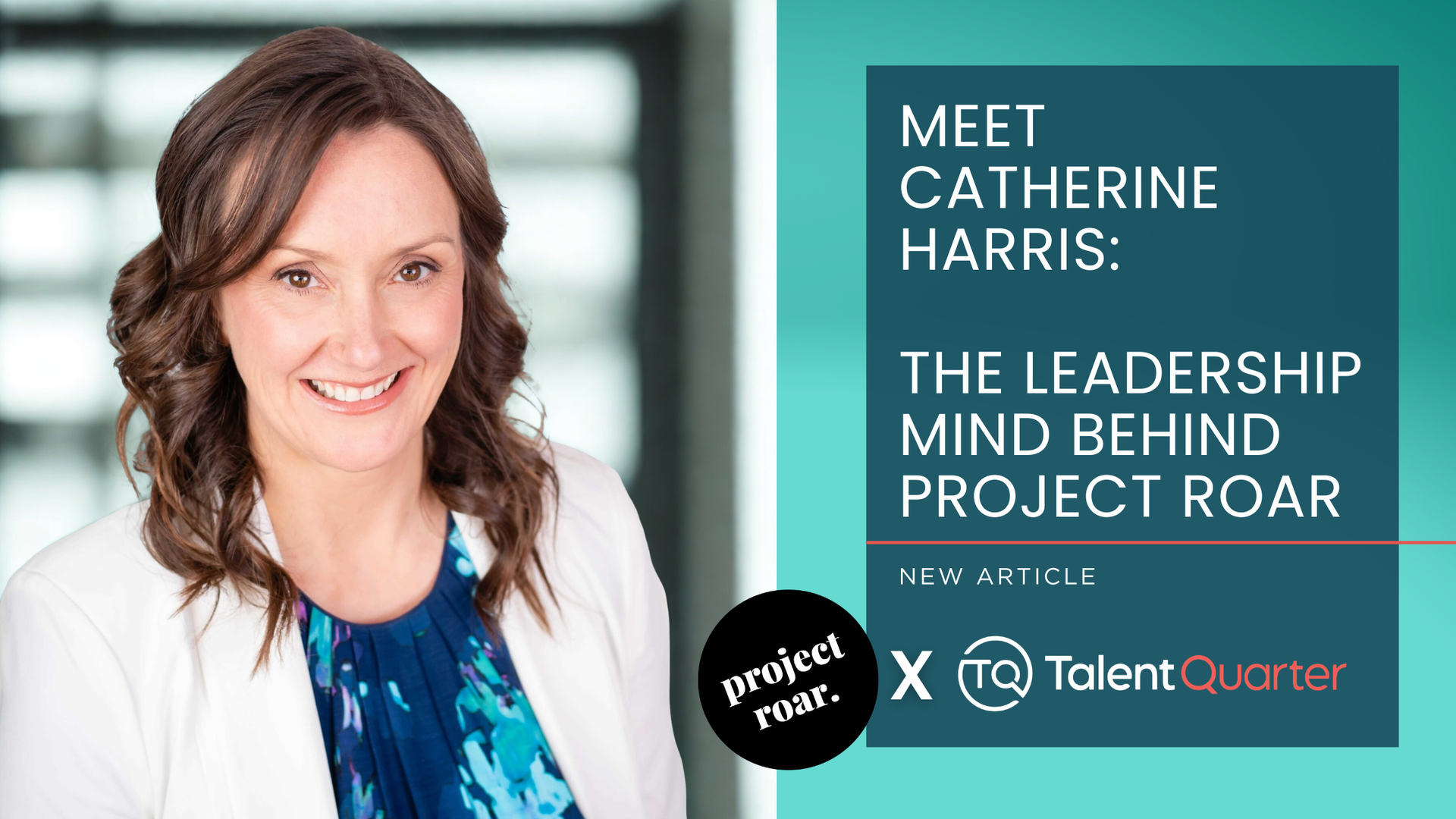
Meet Catherine Harris: The Leadership Mind Behind Project Roar At Talent Quarter, we really do believe strong workforce outcomes are driven by strong leadership. As part of our commitment to delivering meaningful value beyond recruitment, we’re proud to partner with Catherine Harris, Founder of Project Roar , to deliver a quarterly Leadership Masterclass Series focused on strengthening leadership capability across the sectors we support. Exciting! This initiative reinforces an important objective for us, which is to deepen our client relationships through high-impact learning opportunities , helping organisations build stronger leadership capability across the sectors we support. With over 20 years’ experience in career and leadership development, Catherine brings practical, outcome-focused insights that help organisations build high-performing, engaged teams. Ahead of the upcoming series, we sat down with Catherine to learn more about her background, her approach to leadership, and what participants can expect. Q&A with Catherine Harris For those who may not know you, can you tell us a little about your background and what led you to found Project Roar? I’ve spent my entire career at the intersection of talent and leadership. I built my early career in recruitment before moving into senior internal talent roles, including heading up the Talent Acquisition function at Singtel Optus. I led a leadership team responsible for all national hiring, from call centre through to C-suite, and what that experience really gave me was a front-row seat to what great leadership looks like and, just as importantly, what happens when it’s missing. You see the impact every day - in who stays, who leaves, who thrives, and who disengages. It almost always comes back to the leader. From there I moved into a Business Manager role supporting one of the senior executives at Optus, which sharpened my commercial thinking and gave me a deep understanding of how leadership plays out at the executive level - the pressures, the decision-making, and the ripple effect a leader has across an entire organisation. When I made the decision to leave corporate and eventually start Project Roar, I knew I wanted to focus on leadership and career coaching. I’d seen too many talented people get promoted into leadership roles with no development, no support, and no toolkit - and I wanted to change that. I now work with individuals and organisations to build stronger, more confident leaders and help people forge successful careers. What can participants expect to walk away with from this Masterclass Series with Talent Quarter? Honestly, the thing I’m most excited about is that we’re giving people development they wouldn’t normally prioritise. We all know how it goes - leadership development is important, but it keeps getting bumped for the “real work.” This series removes that barrier. It’s bite-sized, practical, and designed to fit into a busy schedule through a lunch-and-learn format . Across the four sessions, participants will build real, usable skills: how to delegate with clarity and confidence , how to have courageous conversations around underperformance , how to lead with positivity and a growth mindset , and how to communicate strategically to keep teams aligned and engaged . These are the everyday leadership moments that make-or-break team performance, and participants will leave each session with something they can apply straightaway. What’s one practical insight or shift you’re excited to share with participants? The shift I see time and again in my coaching work is when leaders realise that the things holding them back aren’t big, complex strategic problems. They’re the everyday leadership moments they’re not getting right. They’re hanging onto tasks instead of delegating with clarity. They’re avoiding the tough conversation because they’re hoping the problem will sort itself out. They’re communicating reactively instead of strategically. Or they’re so focused on putting out fires that they’ve lost sight of the kind of leader they actually want to be. What I love about this series is that each session tackles one of those moments head-on. What’s one common mistake organisations make when developing leaders? Simply not doing it. That’s the honest answer. Organisations will invest heavily in hiring the right people. They’ll invest in systems and technology. But when it comes to actually developing the leaders who are responsible for driving performance and culture every single day, it falls off the priority list. People get promoted into leadership roles because they were brilliant at their previous job, and then they’re just expected to figure it out. There’s no structured development, no coaching, no investment in the skills that leadership actually requires - things like delegation, communication, giving feedback, and navigating change. And then we wonder why engagement drops or performance stalls. If you want strong leaders, you have to build them. It doesn’t happen by accident. What’s Coming Next? As part of this partnership, Talent Quarter and Project Roar will be launching a quarterly four-part Leadership Masterclass Series designed to equip leaders with practical tools they can apply immediately in their roles. The first webinar, The Art of Delegation , will focus on helping leaders delegate with clarity and confidence by setting clear outcomes, defining ownership, and empowering their teams to take responsibility. In the lead-up to the webinar and masterclass series, we’ll also be sharing a series of leadership insights and perspectives from Catherine , giving our community a preview of the thinking and practical strategies that will be explored further during the sessions. Strengthening Leadership Across Health and Care Through this Masterclass Series, Talent Quarter aims to equip leaders with practical tools that can be applied immediately , strengthening performance, communication and team effectiveness across health and care organisations. We’re excited to partner with Catherine Harris and look forward to supporting our clients and partners through this initiative - continuing to invest in leadership capability across the sectors we serve. Stay tuned for the next instalment in this series!

When Jayda took on an 8-week short-term nursing contract in Kalgoorlie, Western Australia with Talent Quarter, she knew it would be an adventure - but she didn’t realise just how memorable the experience would become. Working with WACHS (WA Country Health Service), Jayda embraced the opportunity to step outside her comfort zone and immerse herself in regional healthcare. Discovering Kalgoorlie For Jayda, one of the standout highlights was getting stuck in and learning about the culture and history of the town. “Visiting the Super Pit and seeing the sheer size of it was incredible,” she shared. “It really puts things into perspective.” Regional contracts offer more than just professional growth - they create space for genuine exploration and connection with communities many people may never otherwise experience. Support Every Step of the Way Jayda described her experience working with Talent Quarter as seamless from start to finish. “Onboarding with my agent went smoothly, and her communication was great. We video called before the contract so she could explain everything clearly, and she was always accessible during the placement if I needed anything.” That ongoing support can make all the difference when stepping into a new environment, especially in regional or rural settings. Why Regional and Rural Nursing? Jayda is a strong advocate for nurses considering regional contracts. “I would definitely recommend regional and rural nursing to others. It allows you to build experience and see all different types of presentations. These contracts often cover a wide area, so you get exposure to a bit of everything.” Beyond the clinical experience, it’s also about the adventure. “You get to go to places you may not have ever planned to visit before. I’m so glad I did it — it’s an experience I’ll cherish forever.” Her Advice? “Just do it! Round up a nursing buddy - or even a furry friend 🐕 - and go explore regional and rural Australia.” For Jayda, the leap was more than worth it. It was a professional and personal experience that expanded her skills, broadened her perspective, and created lifelong memories. Try you r hand at it! Ready to pack your scrubs (and maybe your pup)? Reach out to Jeane and start planning your own regional adventure. She’ll work closely with you to find a placement that suits your goals, lifestyle and experience. 👉 Contact Jeane today to explore available regional contracts. 📧 Email: jeane.seducon@talentquarter.com 📞 Phone: +61 8 6400 6434

By Sue Healy | Talent Quarter Thought Leadership Series

5 Decades of Nursing, Community and a Norfolk Island Adventure

As the year draws to a close, it’s natural to switch gears: to reflect on the past 12 months, recharge over the holidays and perhaps start to think about what comes next. If you’re working in the healthcare sector - whether nursing, allied health, aged care or medical support - now is an excellent time to give some thought to your next career step . At Talent Quarter, we have fantastic opportunities waiting for you, and we’d love to get you connected. Get in touch with us today and let’s make your next step the best career move so for you. Below is our career-checklist and some practical tips to help you approach a job move in the new year - with less stress, more clarity and even while you enjoy your holiday downtime. Why now could be a smart time for a change Even though the labour market has its fluctuations, the healthcare sector in Australia continues to show strong underlying opportunities.

Working in rural and remote healthcare isn’t just a career move, for some, it’s a calling. For many nurses, it’s about stepping into communities where access to healthcare can be limited, and where your presence actually makes a world of difference. One of our incredible nurses, Brittanie , has spent the past three years working across remote Australia - and she shared what this experience has meant to her, she says: “After spending time in rural areas, I realised how much impact you can have in small communities. Every day is different - from emergency response and CareFlight retrievals to outstation visits and primary healthcare - and you never stop learning.” Connection is at the Heart of Care What stands out most about rural nursing isn’t just the variety of work, it’s the connection. In these communities, you’re not just a clinician; you’re a massive part of their lives. You're able to see the results of your care first-hand and watch families grow across generations. The landscape, culture, and pace of life bring a sense of purpose and grounding that’s hard to find elsewhere. “Being surrounded by country and culture gives you a real sense of meaning. It’s not just healthcare - it’s connection, belonging, and learning from the strength and resilience of the communities you serve.” At TQ, this is a first-hand example of what we call Connections with Impact.
Frequently Asked Questions
Got a question? We’ve compiled answers to the most common queries from healthcare professionals and employers. If you can’t find what you’re looking for, our team is only a message away.
For Employers
How does Talent Quarter’s recruitment process work?
We start with understanding your organisation, your culture, your team, and what great care means to you. Then we identify the right people from our national network, handle all compliance and credentialing, and manage the process from interview to onboarding. You get quality hires with less back-and-forth.
Why can Talent Quarter find candidates when others can’t?
Because healthcare recruitment is all we do. Our consultants are specialists with deep sector knowledge and extensive networks of active and passive candidates. We know where to find exceptional clinicians, and how to connect them quickly, compliantly, and with cultural fit in mind.
What sectors do you recruit for?
We partner with government departments, public and private hospitals, aged care providers, and community health organisations across metro, regional, and remote Australia.
What service delivery models do you offer?
Our solutions are designed to suit your needs: Retained & Executive Search, Temporary, Shift-Based, Travel Nurse, Locum, and Clinical Services. Each one is built around compliance, speed, and the right outcomes for your patients and teams.
How fast can you fill a vacancy?
With an engaged, ready-to-work national workforce, we can respond to urgent staffing needs quickly without compromising quality or compliance.
How do you ensure compliance and safety?
Every candidate is fully vetted through our credentialing process — including AHPRA registration, background checks, and references. Our governance framework meets national healthcare standards so you can hire with confidence.
What does it cost to use Talent Quarter’s services?
Fees vary depending on the service model and scope of work. We’re transparent from the start, providing clear pricing and outlining what’s included, so there are no surprises.
Do you offer any guarantees?
Yes. We stand behind every placement. If a hire doesn’t meet expectations within the agreed period, we’ll work with you to find a suitable replacement at no additional cost.
For Jobseekers
What types of healthcare roles can I find with Talent Quarter?
We recruit nurses, doctors, midwives, allied health professionals, social and community care workers, aged care staff, and clinical specialists across both permanent and temporary opportunities.
Where in Australia can I work?
We offer placements across metro, regional, and remote Australia, giving you the flexibility to choose where and how you work.
Do you help with travel or accommodation for contracts?
Yes. For many locum and travel nursing roles, we assist with flights, accommodation, and logistics, so you can focus on your work, not the paperwork.
What benefits will I receive as part of the Talent Quarter workforce?
You’ll receive onboarding packs and scrubs, access to lifestyle discounts, retention bonuses, professional development, and tax benefits such as LAFHA. Plus, you’ll have continuous support from your consultant and access to our Employee Assistance Program (EAP).
Do you offer career development opportunities?
Absolutely. We provide access to learning platforms, ongoing training, and tailored career pathways to help you grow in your specialty and step into leadership roles.
I’m an international nurse. Can I apply?
Yes, we support international healthcare professionals relocating to Australia. We’ll guide you through AHPRA registration, visa options, and the transition into work and life here.
How does the referral bonus work?
Refer a colleague or friend to Talent Quarter. When they join our workforce and complete their first placement, you’ll receive a referral bonus as a thank-you for helping us grow our community of care.
Do you offer visa sponsorship?
Yes. We’ll advise on eligibility and guide you through every step.
What support do you provide for relocation?
We’ll help with documentation, travel, accommodation, and local orientation. You’ll also receive ongoing support after you arrive in Australia.
Do I need AHPRA registration before applying?
You’ll need to start your AHPRA registration process before beginning work in Australia. Our team can help you understand the pathway and paperwork required.
Refer a Colleague. Earn Rewards.
Know someone who’d make a great fit for the Talent Quarter workforce? Refer them to us and receive a referral bonus once they start their first placement. It’s our way of thanking you for helping us grow a stronger healthcare community.
Sign Up to Our Newsletter
Sign up to our newsletter for industry insights, job trends, and career tips delivered straight to your inbox.